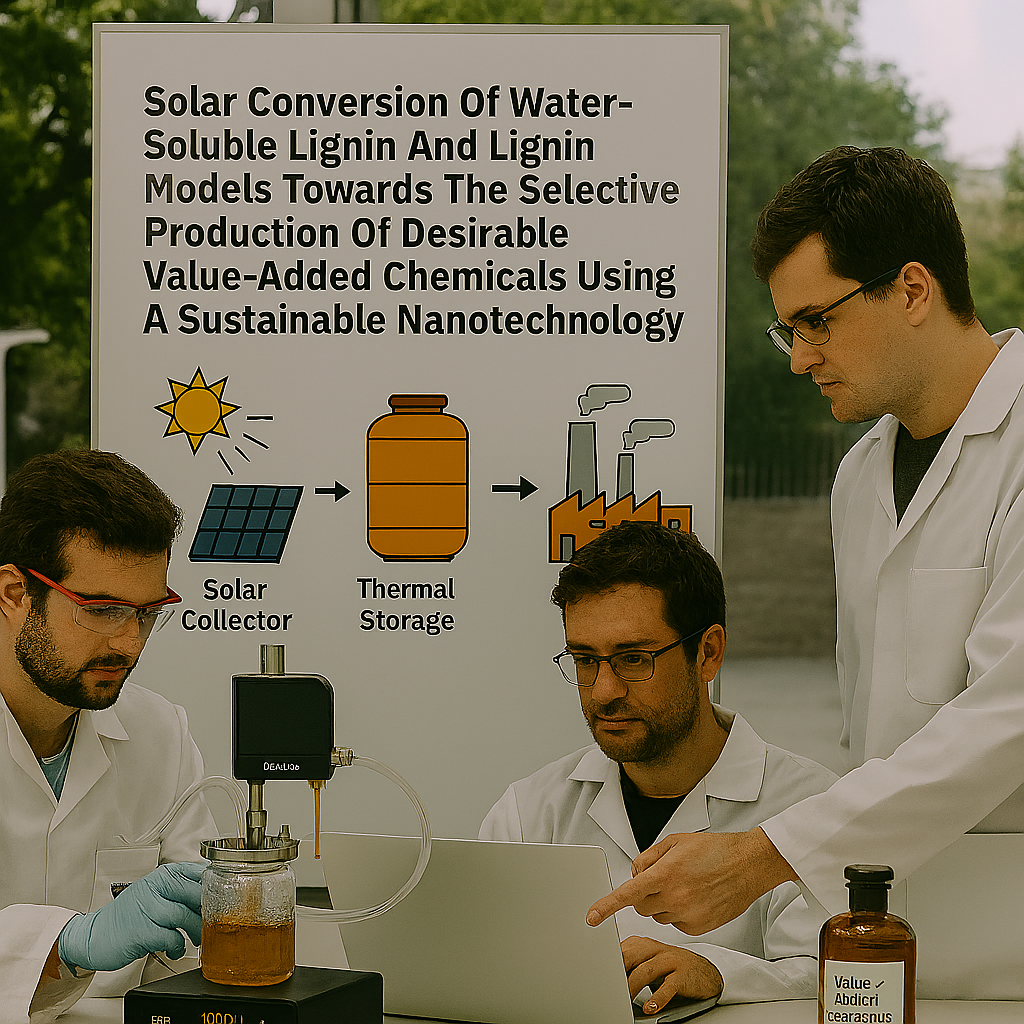
Solar Conversion Of Water-Soluble Lignin And Lignin Models Towards The Selective Production Of Desirable Value-Added Chemicals Using A Sustainable Nanotechnology - 2024/2028
The solar conversion of water-soluble lignin and lignin model compounds using sustainable nanotechnology offers a promising pathway to transform an abundant waste into high-value chemicals. Lignin, often regarded as an underutilized byproduct of biomass, contains aromatic structures with great potential for generating useful compounds. Through the use of solar-activated nanocatalysts, it is possible to selectively break the most resistant bonds in lignin and steer the reaction toward specific molecules, such as functionalized aromatics, bioplastic precursors, or pharmaceutical intermediates.
This approach not only leverages a renewable and abundant resource, but also reduces reliance on fossil energy-intensive processes. The selectivity enabled by nanotechnology avoids complex mixtures and facilitates the production of higher-value products. Moreover, by using solar radiation as the driving force, the process lowers the carbon footprint and contributes to a circular bioeconomy. Altogether, this strategy turns a lignocellulosic waste into a strategic resource for the sustainable energy and chemical transition.
Program: Fondecyt
Project Duration: 48 months
Principal Investigator: José Miguel Cardemil Iglesias