Energy storage with second life batteries to reduce costs and avoid waste - 2021/2022
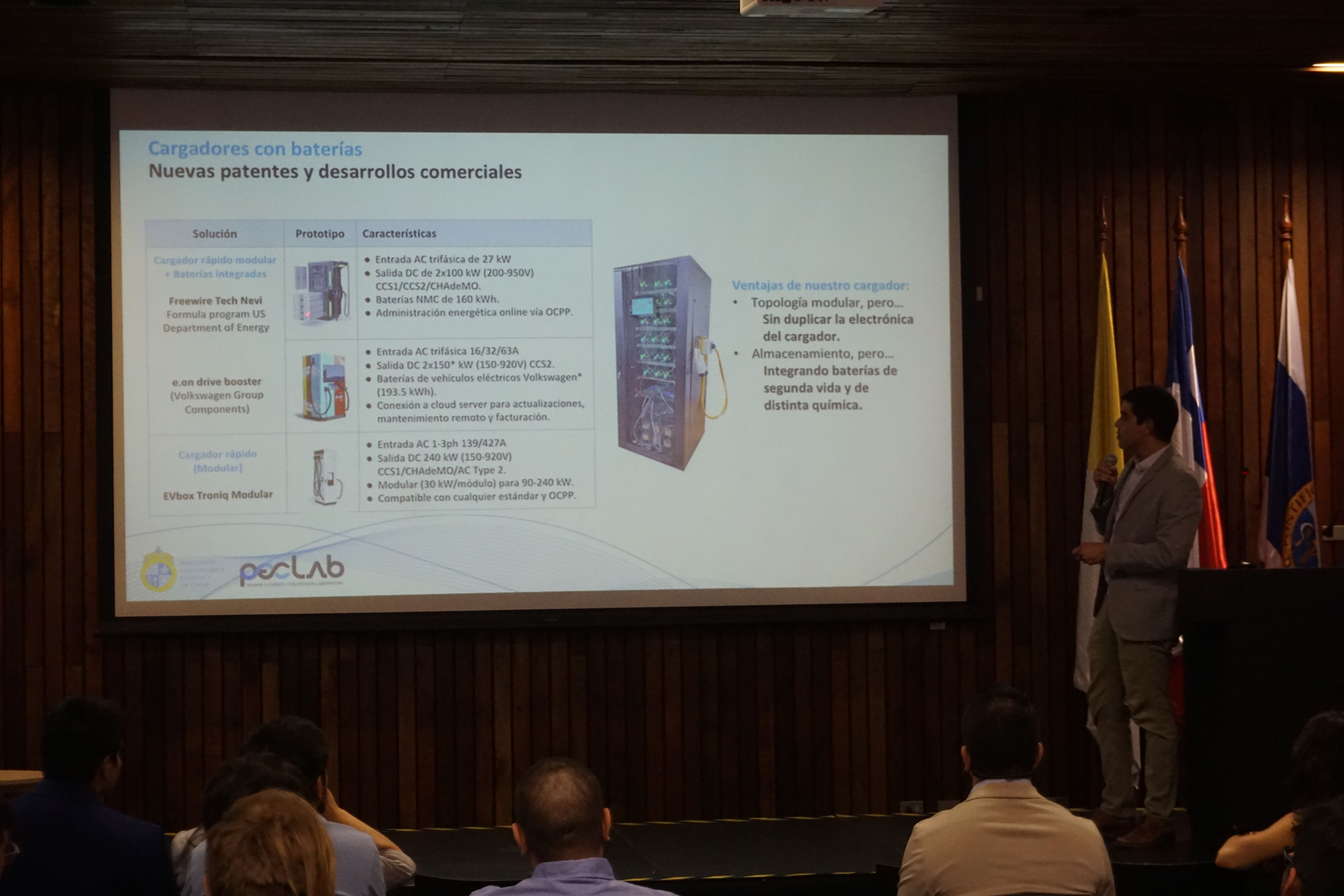
The project consisted in the development of an electric vehicle charging station with a capacity of 50 kW DC, which has a backup battery system made up of second-life batteries. Those batteries were reused and obtained from electric bicycle battery modules, computers, among other electronic equipment.
Some benefits of having a battery bank in a charging station are the possibility of achieving greater charging power without overloading the network, taking advantage of energy during the hours with the lowest supply cost (which are at noon), giving stability to the system, among other benefits.
In the first stage of development, the team focused on obtaining obsolete batteries to later analyze their capacities and charge/discharge curves, to characterize and organize them according to their state of "health".
Then the batteries were integrated into different modules, which were finally incorporated into the electric charger. In order to operate with batteries of different types and integrity, the team had to develop a highly sophisticated “Battery Management System” (BMS), which allowed the batteries to operate together despite their different operating conditions.
Additionally, the charging system has an inverter that allows different energy flows to and from the vehicle: charging the vehicle with 100% energy from the network, charging the vehicle with energy from the network and batteries from the charger, delivering energy to the network from the vehicle and batteries from the charger.
The project was developed by academics Javier Pereda and Félix Rojas, with the support of the Energy Conversion Laboratory (PECLAB) of UC Electrical Engineering, Andes Electronics, Emoac, and Clever Group.
Project duration: 24 months. 1/1/2021 to 12/31/2022.
Main researchers: Javier Pereda and Félix Rojas.